What to expect
Does microneedling hurt?
Most people find microneedling uncomfortable rather than painful — a light scratching or prickling as the device passes over the skin. How much you feel depends on the depth, the area, and your own sensitivity.
The honest answer
What it actually feels like
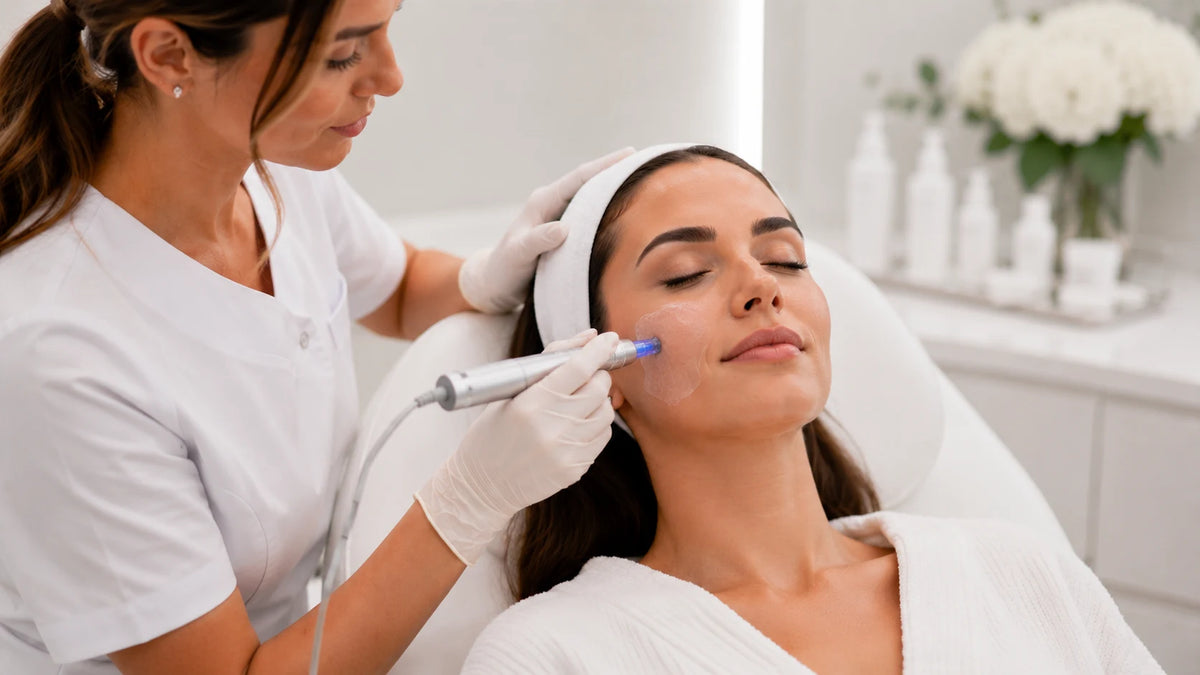
Microneedling is usually described as uncomfortable rather than painful. Most people feel a fine scratching or prickling sensation, strongest over bonier areas like the forehead and jawline, and lighter across the cheeks. The needle depth makes the biggest difference — a light refresh facial feels very different to a deeper treatment for scarring. Some people prepare beforehand with a topical preparation to support comfort.
The essentials
- What it feels like
- Usually uncomfortable rather than painful — a light scratching or prickling.
- What changes it
- Needle depth, the area treated, and individual sensitivity.
- Numbing's role
- Most practitioners apply a numbing preparation as standard.
- The range
- Senseless, a UK cosmetic range made by Matrix Health Group Ltd.
Where microneedling sits — and what changes it
Some people prepare beforehand with a topical preparation to support comfort.
The variables
What affects how much you feel
- Needle depth. The single biggest factor. Shallower treatments are largely comfortable; deeper work for scarring or stretch marks is more intense.
- The area. Skin over bone — forehead, hairline, jaw, nose — is more sensitive than fuller areas like the cheeks.
- Your own sensitivity. Pain thresholds vary, and skin can be more reactive around your period or when it's already irritated.
- Whether numbing is used. Most practitioners apply a numbing preparation before the session as standard.
Preparation, not the result
Bringing your own preparation
Most microneedling practitioners apply their own numbing preparation before they start — so for many people, bringing your own isn't necessary. Where you're preparing at home, a topical numbing gel is the usual choice for facial work because it stays where it's placed. Numbing is about comfort and preparation, not the result of the treatment, and it's removed before the device is used. If you're not sure what your appointment involves, a quick message to your practitioner settles it.
The right gel for microneedling · Not sure what you need? Use the Senseless Selector
What to expect afterwards
Skin is usually pink and feels warm or tight for a day or two after microneedling, a little like mild sunburn. Most people find the redness settles within 24–72 hours, with deeper treatments taking a little longer. Keep the skin clean and protected, follow your practitioner's aftercare advice, and avoid heavy actives and direct sun while it recovers. Numbing is only used before the treatment for comfort — it has no role in aftercare.
The Senseless Selector
Not sure which to choose?
Answer three quick questions — treatment, skin and session length — and we'll point you to the format and strength we'd reach for.
Common questions
Is microneedling painful?
For most people it's uncomfortable rather than painful — a light scratching or prickling. Deeper treatments for scarring feel more intense than a surface refresh.
Do I need to bring my own preparation for microneedling?
Most practitioners apply a numbing preparation before the session as standard.
Where does microneedling hurt most?
Over bonier areas — the forehead, hairline and jaw — and least across the fuller part of the cheeks.
Do I need to bring my own numbing cream?
Often not — most practitioners apply numbing cream themselves. Check with yours before your appointment.
What should I expect after microneedling?
Skin is typically pink, warm and a little tight for one to three days, similar to mild sunburn, then settles. Follow your practitioner's aftercare advice.
How long does microneedling take to heal?
Most people find visible redness settles within 24–72 hours; deeper treatments can take a little longer.